
Effects of mixed beech and hornbeam stands on soil properties and plant species diversity indices in Hyrcanian forests of Iran
DOI:
https://doi.org/10.21829/myb.2020.2632015Keywords:
biodiversity conservation, herb layer diversity, species composition, species richness, sustainable forestryAbstract
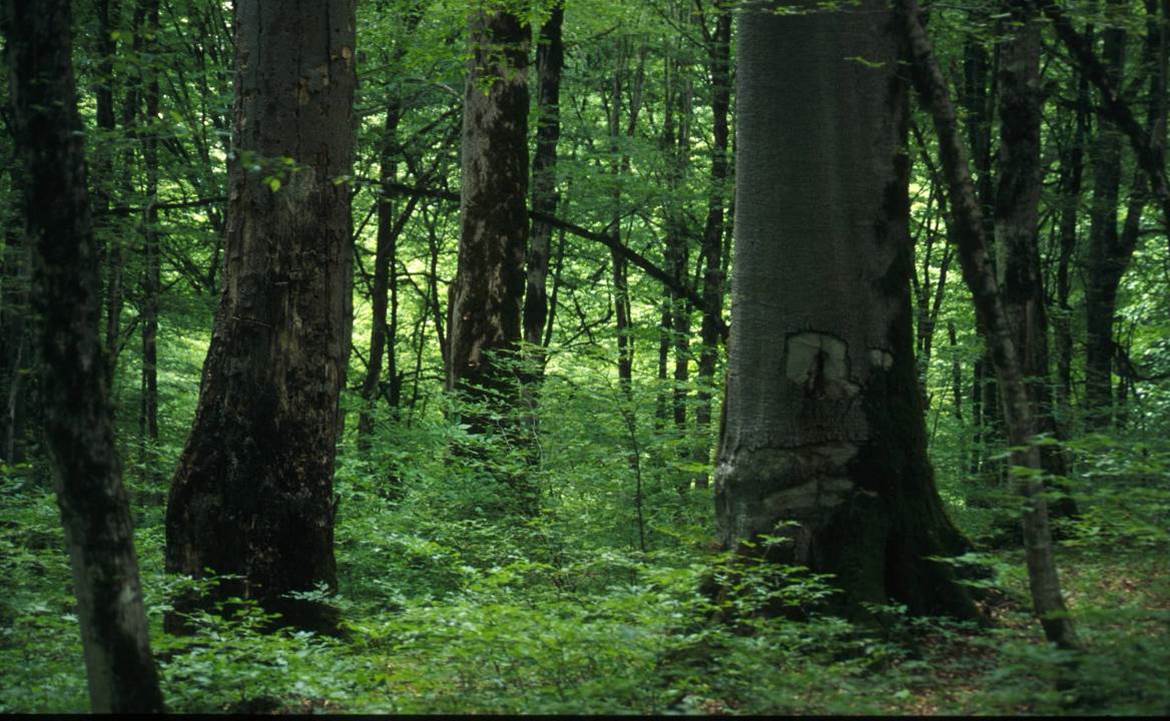
Revealing the effect of mixed beech and hornbeam stands on herb layer diversity is essential for sustainable forestry and biodiversity conservation since little is known in Hyrcanian forests. So, we studied the effects of such stands on understory diversity and soil physico-chemical properties in Hyrcanian forests of Iran. Forty sampled plots were established by random systematic sampling method with a regular 100 m × 200 m grid. At each sample point we recorded species identity and percent cover of each tree layer and herb layer species within plots of size 400 m2 (20 m × 20 m) and 100 m2 (10 m ×10 m) respectively. Soil samples were taken from 0 cm -10 cm and 10 cm - 30 cm soil depths. Cluster analysis was used to classify the samples based on the floristic composition data. Also detrended correspondence analysis (DCA) method was employed to assess the relationship between vegetation and environmental variables. There was no significant difference in terms of species richness, and diversity between mixed beech stands and hornbeam stands, but cluster analysis indicated that these stands were separated in two different groups based on herb layer species composition. DCA results showed that litter thickness, soil texture, total nitrogen, and organic carbon in the first layer were considered effective environmental variables in the distribution of sample plots in two stands. We observed that tree layer composition and soil characteristics were crucial contributors to variations of understory species composition which may be changed by forest management approaches over time. Tree layer composition and soil attributes can be considered effective factors for controlling and assessment of understory plant species composition. These findings could provide guidelines for conserving plant species diversity within any framework of sustainable forest management in Hyrcanian forests.
Downloads
References
Adel, M., Pourbabaei, H., Omidi, A., & Dey, C. (2013). Forest structure and woody plant species composition after a wildfire in beech forests in the north of Iran. Journal of Forestry Research, 24, 252-262. doi: 10.1007/s11676-012-0316-7 DOI: https://doi.org/10.1007/s11676-012-0316-7
Ali, A., Yan, E. R., Chang, S. X., Cheng, J. Y., & Liu, X. Y. (2017). Community-weighted mean of leaf traits and divergence of wood traits predict aboveground biomass in secondary subtropical forests. Science of the Total Environment, 574, 654-662. doi: 10.1016/j.scitotenv.2016.09.022 DOI: https://doi.org/10.1016/j.scitotenv.2016.09.022
Amini, R., Rahmani, R., & Habashi, H. (2011). Nitrogen, phosphorus and carbon dynamics of hornbeam leaf litter (Case study: District one, Shastkalate forest, Gorgan). Iranian Journal of Forest and Poplar Research, 19(1), 94-103.
Ampoorter, E., Baeten, L., Koricheva, J., Vanhellemont, M., & Verheyen, K. (2014). Do diverse overstoreys induce diverse understoreys? Lessons learnt from an experimental–observational platform in Finland. Forest Ecology and Management, 318, 206-215. doi: 10.1016/j.foreco.2014.01.030 DOI: https://doi.org/10.1016/j.foreco.2014.01.030
Augusto, L., De Schrijver, A., Vesterdal, L., Smolander, A., Prescott, C., & Ranger, J. (2015). Influences of evergreen gymnosperm and deciduous angiosperm tree species on the functioning of temperate and boreal forest. Biological Reviews, 90(2), 444-466. doi: 10.1111/brv.12119 DOI: https://doi.org/10.1111/brv.12119
Barantal, S., Castagneyrol, B., Durka, W., Lason, G., Morath, S., & Koricheva, J. (2019). Contrasting effects on tree species and genetic diversity on the leaf – miner communities associated with silver birch. Oecologia, 189(3), 678-697. doi : 10.1007/s00442-019-04351-x DOI: https://doi.org/10.1007/s00442-019-04351-x
Bartels, S. F. & Chen, H. Y. H. (2013). Interactions between overstorey and understorey vegetation along an overstorey compositional gradient. Journal of Vegetation Science, 24(3), 543-552. doi: 10.1111/j.1654-1103.2012.01479.x DOI: https://doi.org/10.1111/j.1654-1103.2012.01479.x
Bakhshandeh-Navroud, B., Abrari Vajari, K., & Kooch, Y. (2018). The interactions between tree-herb layer diversity and soil properties in the oriental beech (Fagus orientalis Lipsky.) stands in Hyrcanian forest. Environmental Monitoring and Assessment, 190(7), 1-10. doi: 10.1007/s10661-018-6809-x DOI: https://doi.org/10.1007/s10661-018-6809-x
Bohara, M., Yadav, R. K. P., Dong, W., Cao, J., & Hu, C. (2019). Nutrient and isotopic dynamics of litter decomposition from different land uses in naturally restoring Taihang Mountain, North China. Sustainability, 11(6), 1-19. doi:10.3390/su11061752 DOI: https://doi.org/10.3390/su11061752
Dawud, S. M., Raulund-Rasmussen, K., Domisch, T., Fin`er, L., Jaroszewic, B., & Vesterdal, L. (2016). Is tree species diversity or species identity the more important driver of soil carbon stocks, C/N ratio and pH?. Ecosystems, 19 (4), 645–660. doi: 10.1007/s10021-016-9958-1 DOI: https://doi.org/10.1007/s10021-016-9958-1
Dölle, M., Petritan, M. A., Biris, A. L., & Petritan, C. I. (2017). Relations between tree canopy composition and understory vegetation in European beech-sessile oak old growth forest in Western Romania. Biologia, 72(12), 1422-1430. doi: 10.1515/biolog-2017-0165 DOI: https://doi.org/10.1515/biolog-2017-0165
Enright, N. J., Miller, B. P., & Akhter, R. (2005). Desert vegetation and vegetation-environment relationships in Kirthar National Park, Sindh, Pakistan. Journal of Arid Environments, 61(3), 397-41. doi: 10.1016/j.jaridenv.2004.09.009 DOI: https://doi.org/10.1016/j.jaridenv.2004.09.009
Eshaghi Rad, J. (2014). Variations of understory vegetation composition and diversity in pure and mixed beech stands (Case Study: Kheyrud Forest- Noshahr). Iranian Journal of Forest, 6(1), 75-86.
Fujii, K., Shibata, M., Kitajima, K., Ichie, T., Kitayama, K., & Turner, B. (2018). Plant-soil interactions maintain biodiversity and functions of tropical forest ecosystems. Ecological Research, 33, 149-160. doi: 10.1007/s11284-017-1511-y DOI: https://doi.org/10.1007/s11284-017-1511-y
Gamfeldt, L., Snall, T., Bagci, R., Jonsson, M., Gustafsson, L., Kjellander, P & Mikusin`ski, G. (2013). Higher levels of multiple ecosystem services are found in forests with more tree species. Nature Communications, 4, 1-8. doi: 10.1038/ncomms2328 DOI: https://doi.org/10.1038/ncomms2328
Gilliam, F. S. (2007). The ecological significance of the herbaceous layer in temperate forest ecosystems. BioScience, 75(10), 845-858. doi: 10.1641/B571007 DOI: https://doi.org/10.1641/B571007
Guendehou, G.S., Liski, J., Tuomi, M., Moudachirou, M., Sinsin, B., & Makipaa, R. (2014). Decomposition and changes in chemical composition of leaf litter of five dominant tree species in a West African tropical forest. Tropical Ecology, 55(2), 207–220.
Habashi, H. & Waez-Mousavi, S.M. (2017). Single-tree selection system effects on forest soil macrofauna biodiversity in mixed oriental beech stands. Applied Soil Ecology, 123, 441-446. doi:10.1016/j.apsoil.2017.09.023 DOI: https://doi.org/10.1016/j.apsoil.2017.09.023
Hattenschwiler, S. (2005). Effects of Tree Species Diversity on Litter Quality and Decomposition. Forest Diversity and Function, 176, 149-164. doi: 10.1007/3-540-26599-6_8 DOI: https://doi.org/10.1007/3-540-26599-6_8
Jacob, M., Viedenz, K., Polle, A., & Thomas, F. M. (2010). Leaf litter decomposition in temperate deciduous forest stands with a decreasing fraction of beech (Fagus sylvatica). Oecologia, 164, 1083-1094. doi: 10.1007/s00442-010-1699-9 DOI: https://doi.org/10.1007/s00442-010-1699-9
Jafari, J., Tabari, M., Hosseini, S.M., & Kooch, Y. (2014). Effect of soil properties on plant diversity of ecological groups in the reserved forest of Northern Khorasan. Journal of Plant Biology, 28(1), 79-90.
Kerdraon, D., Drewer, J., Castro, B., Wallwork, A., & Hall, J. (2019). Litter Traits of Native and Non-Native Tropical Trees Influence Soil Carbon Dynamics in Timber Plantations in Panama. Forests, 10 (3), 1-17. doi: 10.3390/f10030209 DOI: https://doi.org/10.3390/f10030209
Kooch, Y., Samadzadeh, B., & Hosseini, S M. (2017). The effects of broad-leaved tree species on litter quality and soil properties in a plain forest stand. Catena, 150, 223-229. doi: 10.1016/j.catena.2016.11.023 DOI: https://doi.org/10.1016/j.catena.2016.11.023
Kooch, Y., Sanji, R., & Tabari, M. (2019). The effect of vegetation change in C and N contents in litter and soil organic fractions of a Northern Iran temperate forest. Catena, 178, 32-39. doi: 10.1016/j.catena.2019.03.009 DOI: https://doi.org/10.1016/j.catena.2019.03.009
Kooijman, A. K. & Cammeraat, E. (2010). Biological control of beech and hornbeam affects species richness via changes in the organic layer, PH and soil moisture characteristics. Functional Ecology, 24(2), 469-477. doi: 10.1111/j.1365-2435.2009.01640.x DOI: https://doi.org/10.1111/j.1365-2435.2009.01640.x
Lorenz, M. & Thiele-Bruhn, S. (2019). Tree species affect soil organic matter stocks and stoichiometry in interaction with soil microbiota. Geoderma, 353, 35-46. doi: 10.1016/j.geoderma.2019.06.021 DOI: https://doi.org/10.1016/j.geoderma.2019.06.021
Lukac, M. (2017). Soil biodiversity and environmental change in European Forests. Central European Forestry Journal, 63(2), 59-65. doi: 10.1515/forj2017 0010 DOI: https://doi.org/10.1515/forj-2017-0010
Marcos, J. A., Marcos, E., Taboada, A., & Tarrega, R. (2007). Comparsion of community structure and soil characteristics in different aged Pinus sylvestris plantations and a natural pine forest, Forest Ecology and Management, 274, 35-42. doi: 10.1016/j.foreco.2007.04.022 DOI: https://doi.org/10.1016/j.foreco.2007.04.022
Marozas, V., Augustatitis, A., Armolaitis, K., Kliucius, A., & Pilkauskas, M. (2013). Effects of planted European beech on the understory in Scots pine forests of Lithuania. Biogeosciences and Forestry, 7(1), 12-18. doi: 10.3832/ifor0695-007 DOI: https://doi.org/10.3832/ifor0695-007
Mestre, L., Toro-Manríquez, M., Huertas-Herrera, A., Martínez-Pastur, G., & Lencinas, M. V. (2017). The influence of canopy-layer composition on understory plant diversity in Southern temperate forests. Forest Ecosystems, 4(6), 1-13. doi: 10.1186/s40663-017-0093-z DOI: https://doi.org/10.1186/s40663-017-0093-z
Midolo, G., Alkemade, R., Schipper, A. M., Benitez-Lopez, A., Perring, M. P., & De vries, W. (2018). Impacts of nitrogen addition on plant species richness and abundance: A global meta-analysis. Global ecology and Biogeography, 28(3), 398- 413. doi: 10.1111/geb.12856 DOI: https://doi.org/10.1111/geb.12856
Modabberi, A. & Minaie, H. (2014). Biodiversity and plant species richness study in relation to physiographic factors and soil physicochemical properties (KhoramAbad, Khankamandar region). Environmental Science and Engineering, 1(4), 19-27.
Mölder, A., Bernhardt-Römerman, M., & Schmidt, W. (2008). Herb- layer diversity in deciduous forests: Raised by tree richness or beaten by beech?. Forest Ecology and Management, 256, 272-281. doi:10.1016/J. foreco.2008.04.012 DOI: https://doi.org/10.1016/j.foreco.2008.04.012
Petersen, H. & Luxton, M. (1892). A comparative analysis of soil fauna populations and their role in decomposition processes. OIKOS, 39, 287-388. DOI: https://doi.org/10.2307/3544689
Prado-Junior, J. A., Schiavini, I., Vale, V. S., Arantes, C. S., Sande, M. T., Lohbeck, M., & Poorter, L. (2016). Conservative species drive biomass productivity in tropical dry forests. Journal of Ecology, 104(3), 817-827. doi: 10.1111/1365-2745.12543 DOI: https://doi.org/10.1111/1365-2745.12543
Prescott, C. E. & Vesterdal, L. (2013). Tree species effects on soils in temperate and boreal forests: Emerging themes and research needs. Forest Ecology and Management, 309, 1–3. doi: 10.1016/j.foreco.2013.06.042 DOI: https://doi.org/10.1016/j.foreco.2013.06.042
Ramezani, E., Mohadjer, M. R., Knapp, H. D., Ahmadi, H., & Joosten, H. (2008). The late-Holocene vegetation history of the Central Caspian (Hyrcanian) forests of northern Iran. Holocene, 18(2), 307–321. doi: 10.1177/0959683607086768 DOI: https://doi.org/10.1177/0959683607086768
Rawlik, M., Kasprowicz, M., & Jagodzinski, A. M. (2018). Differentiation of herb layer vascular flora in reclaimed areas depends on the species composition of forest stands. Forest Ecology and Management, 409, 541-551. doi: 10.1016/j.foreco.2017.11.055 DOI: https://doi.org/10.1016/j.foreco.2017.11.055
Schmidt, W. (2005). Herb layer species as indicators of biodiversity of managed and unmanaged beech forest. Forest Snow Landscape Research, 79(1), 111-125.
Scolastri, A., Bricca, A., Cancellieri, L., & Cutini, M. (2017). Understory functional response to different management strategies in Mediterranean beech forest (Central Apennines, Italy). Forest Ecology and Management, 400, 665-676. doi: 10.1016/j.foreco.2017.06.049 DOI: https://doi.org/10.1016/j.foreco.2017.06.049
Vahder, S. & Irmler, U. (2012). Effect of pure and multi species beech (Fagus sylvatica) stands on soil characteristics and earthworm in two northern German forests. European journal of soil Biology, 51, 45-50. doi: 10.1016/j.ejsobi.2012.03.008 DOI: https://doi.org/10.1016/j.ejsobi.2012.03.008
Versluijs, M., Roberge, J. M., Eggers, S., Boers, J., & Hjältén, J. (2019). Ecological restoration for biodiversity improves habitat quality for an insectivorous passerine in boreal forest. Biological Conservation, 237, 90-96. doi: 10.1016/j.biocon.2019.06.025 DOI: https://doi.org/10.1016/j.biocon.2019.06.025
Verstraeten, G., Baeten, L., De Frenne, P., Vanhellemont, M., Thomaes, A., Boonen, W., Muys, B., & Verheyen, K. (2013). Understory vegetation shifts following the conversion of temperate deciduous forest to spruce plantation. Forest Ecology and Management, 289, 363-370. doi: 10.1016/j.foreco.2012.10.049 DOI: https://doi.org/10.1016/j.foreco.2012.10.049
Wang, G., Li, H., An, M., Ni, J., Ji, S., & Wang, J. (2011). A regional-scale consideration of the effects of species richness on above-ground biomass in temperate natural grasslands of China. Journal of Vegetation Science, 22(3), 414-424. doi: 10.1111/j.1654-1103.2011.01279.x DOI: https://doi.org/10.1111/j.1654-1103.2011.01279.x
Xiao, W., Chen, H., Kumar, P., Chen, Ch., & Guan, Q. (2019). Multiple interactions between tree composition and diversity and microbial diversity underly litter decomposition. Geoderma, 341, 161-171. doi: 10.1016/j.geoderma.2019.01.045 DOI: https://doi.org/10.1016/j.geoderma.2019.01.045
Yang, B., Li, Y., Ding, B., Both, S., Erfmeier, A., Hardtle, W., Ma, K., Schmid, B., Scholten, Th., & Seidler, G. (2017). Impact of tree diversity and environmental conditions on the survival of shrub species in a forest biodiversity experiment in subtropical china. Journal of Plant Ecology, 10(1), 179-189. doi: 10.1093/jpe/rtw099 DOI: https://doi.org/10.1093/jpe/rtw099
Zeller, L. & Pretzsch, H. (2019). Effect of forest structure on stand productivity in Central European forests depends on developmental stage and tree species diversity. Forest Ecology and Management, 434, 193-204. doi: 10.1016/j.foreco.2018.12.024 DOI: https://doi.org/10.1016/j.foreco.2018.12.024
Zhang, Q., Buyantuev, A., Li, F.Y., Jiang, L., Niu, J., Ding, Y., Kang, S., & Ma, W. (2017). Functional dominance rather than taxonomic diversity and functional diversity mainly affect community aboveground biomass in the Inner Mongolia grassland. Ecology and Evolution, 7(5), 1605-1615. doi: 10.1002/ece3.2778 DOI: https://doi.org/10.1002/ece3.2778
Zhang, Y., Zhang, C., Wang, Z., Chen, Y., Gang, C., An, R., & Li, J. (2016). Vegetation dynamics and its driving forces from climate change and human activities in the Three-River Source Region, China from 1982 to 2012. Science of the Total Environment, 563, 210-220. doi: 10.1016/j.scitotenv.2016.03.223 DOI: https://doi.org/10.1016/j.scitotenv.2016.03.223
Downloads


Published
How to Cite
-
Abstract4890
-
PDF (Español)579
-
LENS (Español)18
Issue
Section
License
Copyright (c) 2020 Madera y Bosques

This work is licensed under a Creative Commons Attribution-NonCommercial-ShareAlike 4.0 International License.

Madera y Bosques by Instituto de Ecología, A.C. is licensed under a Creative Commons Atribution-Non-Commercial-Share-alike 4.0 International.